
Power catamarans
Power catamarans for sale
Two hulls, a flat ride and a deck that does not heel — the type that has changed the most in the last ten years.
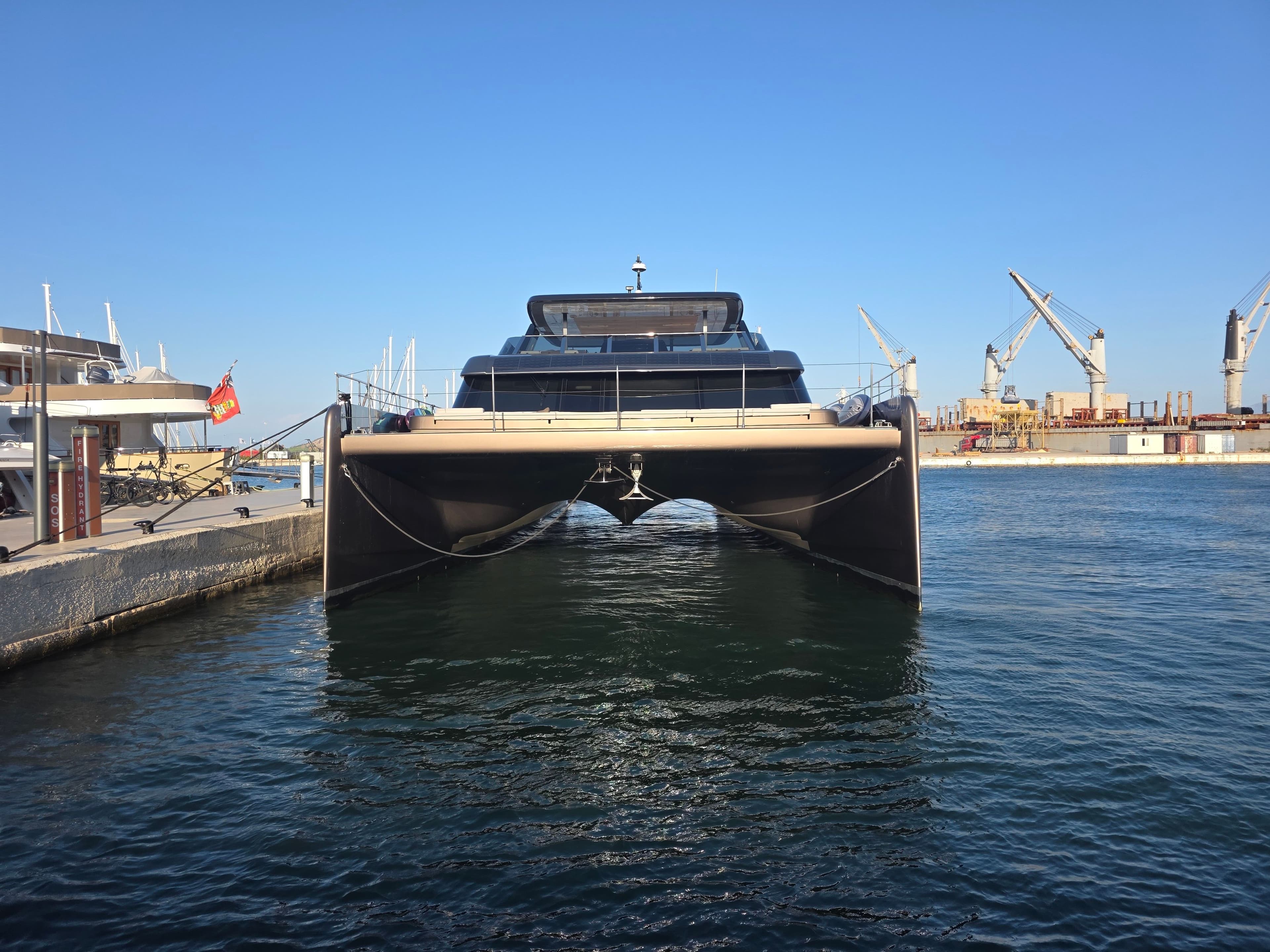
A power catamaran carries its load on two slender hulls instead of one wide one. The immediate effects are the ones people notice on a sea trial: an enormously wide deck for the length, very little roll at rest, and a hull that tracks through a beam sea rather than rolling with it.
The less obvious effect is efficiency. Two narrow hulls make less wave than one beamy one, so a cat will often cruise faster on the same power — or the same speed on less — than an equivalent monohull. Against that: they take more slip than their length implies, they behave differently in a following sea, and the two-engine, two-everything layout is more to maintain.
The offshore fishing cats of the last decade are what pulled the type into the mainstream, and they suit the same water the center consoles here do: long days, a lot of standing up, and a deck people can actually work on.
Who it suits
- Fishing platforms — the deck space per foot is unmatched.
- Anyone who is unhappy in a rolling boat at anchor or on a drift.
- Day boats carrying a lot of people.
- Shallow water; most draw very little for their size.
Where we work
Where they run
A beam sea in the Sounds is where the type makes the most obvious case for itself, and the shallow draft suits the Florida lagoons at the other end of the run.
Builders
The yards we know in this class
Invincible is the catamaran builder on Guard Yacht Group's own list. The power cat market is a wide one and moves quickly, so it is worth asking about anything else you have seen rather than assuming it is out of reach.
Common questions
What people ask before they buy
- Are power catamarans better than monohulls?
- They are better at some things and worse at others, which is why both still sell. A cat gives far more deck space for its length, much less roll at rest and often better fuel efficiency at cruise. A monohull generally costs less to buy and berth, is more predictable in a big following sea, and is easier to sell when the time comes. The honest answer depends on whether roll at rest bothers you.
- Do power catamarans cost more to dock?
- Usually, yes. A cat is significantly beamier than a monohull of the same length, and many marinas charge by the slip rather than by the foot — which can mean paying for a longer slip than the boat needs. It is worth calling your marina before you buy, and it is one of the first things to check on the shortlist.
- How does a power catamaran ride in a chop?
- Through a beam sea, better than almost anything — the two hulls resist the roll that makes a monohull uncomfortable on a drift or at anchor. Head-to-sea the ride is flatter but the motion is sharper, and the tunnel between the hulls will slap in the wrong conditions. This is a type you should sea trial in real weather rather than on a calm morning.